What is the difference between ASTM A36 and S235?
ASTM A36 material is equivalent to steel S235JR. Below is for steel S235JR VS A36 material. Steel S235JR and A36 material has little difference but more common points in chemical composition and mechanical properties. For most projects, they can meet demands of each other.
What is the difference between ASTM A36 and Q355?
ASTM A36:
Standard: American (ASTM A36/A36M).
Typical Use: General structural applications, including bridges, buildings, and other construction projects.
Strength: Lower strength compared to Q355, with a yield point of 250 MPa
Weldability: Good weldability, suitable for various welding processes.
Q355:
Chinese (GB/T 1591).
High-strength structural applications, such as bridges, heavy machinery, and high-rise buildings, especially where higher load-bearing capacity is needed.
Higher strength than A36, with a minimum yield strength of 355 MPa,
Available in different grades (Q355A, Q355B, etc.), with varying impact test requirements at different temperatures.
What is the difference between Q355C and Q355B?
Q355C steel has an increased carbon content, usually ranging from 0.18% to 0.22%. This variant provides improved strength and hardness compared to Q355B. Q355C is often utilized in applications that require higher load-bearing capacity, such as heavy machinery, cranes, and offshore structures.
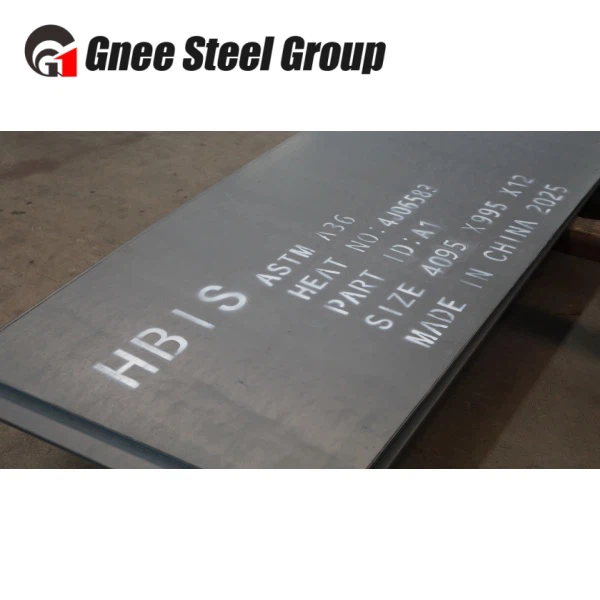
What is the Chinese equivalent of ASTM A36?
grade Q235B
ASTM A36 Steel plate equivalent grade Q235B in China.
What steel is stronger than A36?
Q355B, A572 steel has greater strength and wear resistance than A36 steel, so it may be more suitable for use in heavy weight-bearing applications, such as use in constructing transmission towers or structural pieces enduring great forces.
What is the Japanese equivalent of ASTM A36?
SS400
Japanese Standard SS400 (JIS G3101): In Japan, A36 steel is generally equivalent to SS400 steel under the JIS G3101 standard, which is a general-purpose structural steel.